


Initiative 1: The Viewer Waiting Experience (Dynamic State Model)
Static messages in live-streaming introduce ambiguity, while real-time clarity requires deep technical coordination between calendar events and stream status.
Strategic Move: I architected a Four-Phase Messaging Model that dynamically updates based on the relationship between the Calendar event and the actual Stream state (e.g., "One day early" vs. "Host started/ended").
Outcome: This model effectively eliminated the "Identity Gap" for viewers, replacing generic placeholders with contextually accurate updates that reduced user uncertainty and drop-off during the critical pre-event window. (Jan 2024)
Initiative 2: Host Awareness & Threshold Signaling
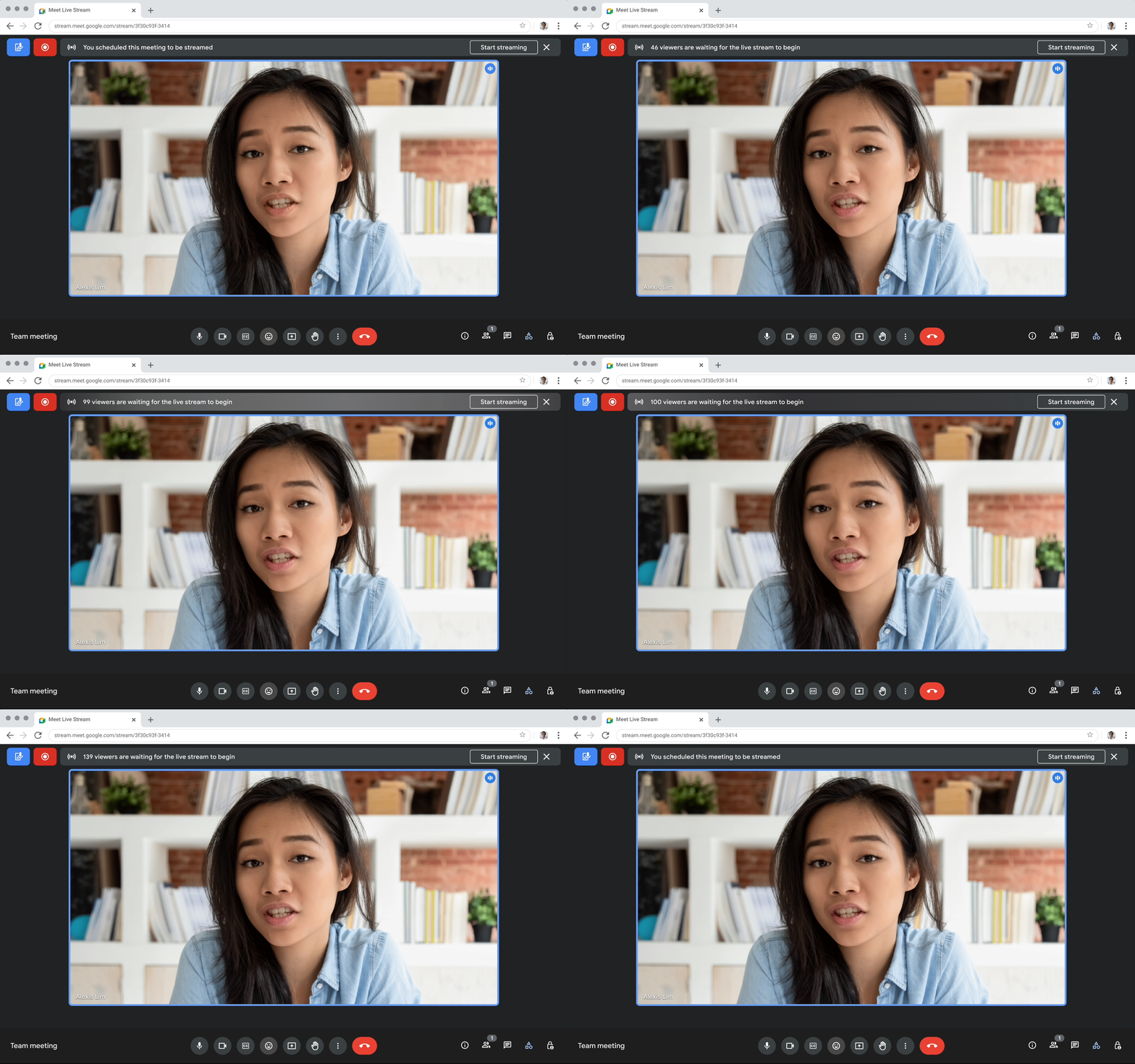
A primary pain point in live-streaming is the "Host Blind Spot"—the lack of awareness regarding the audience size waiting behind the curtain.
Strategic Move: I designed a real-time Threshold Awareness Signal—a subtle, shimmering micro-animation that activates as the waiting audience hits meaningful milestones (e.g., 100, 1k, 10k viewers).
Outcome: This "elegant signal" provides the host with psychological momentum and event readiness without cluttering the UI with distracting, fluctuating numbers during a high-stress preparation phase. (Oct 2023)
Initiative 3: Audio-Only Modal & Persistence Logic
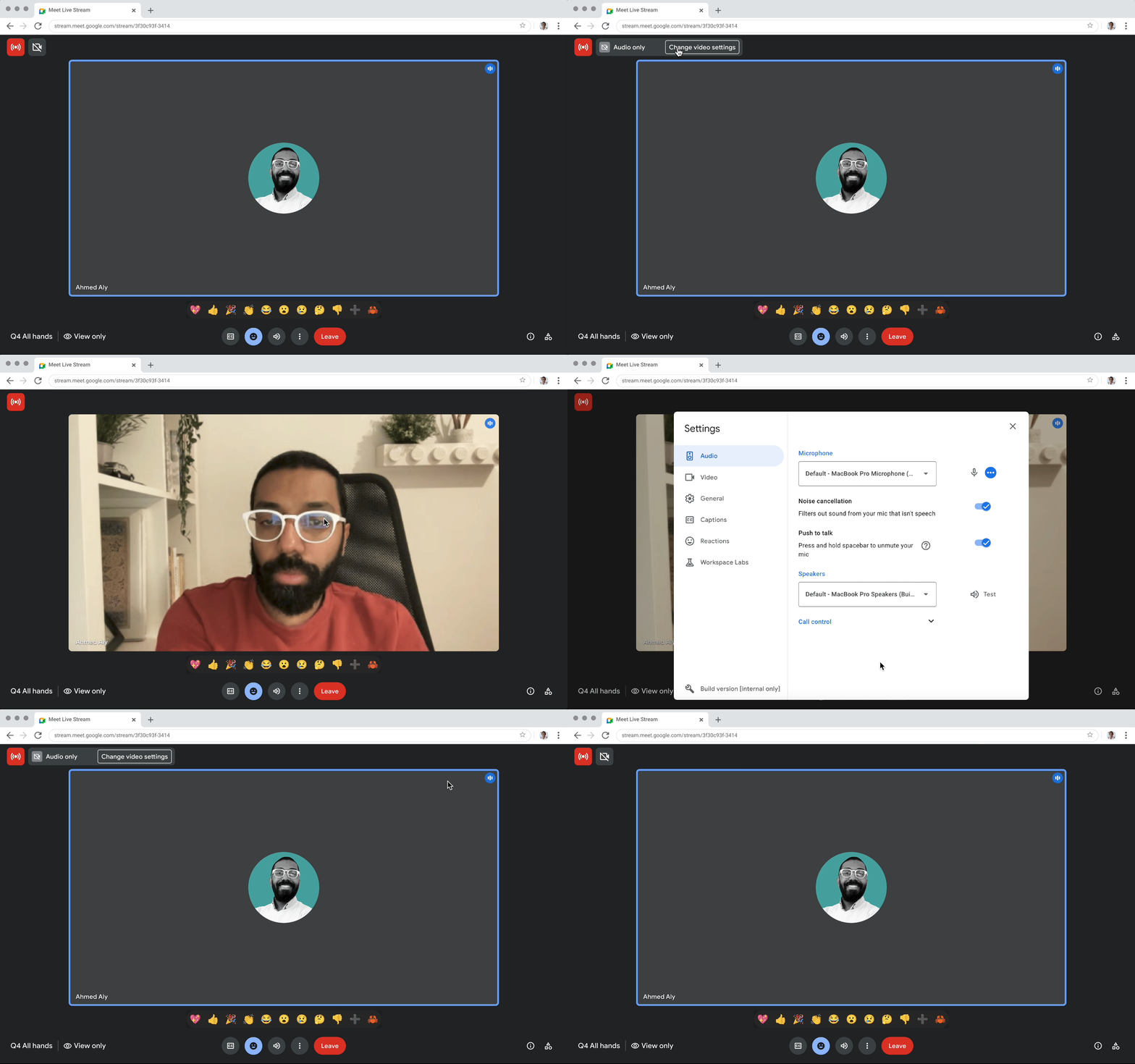
In a broadcast environment, transparency regarding stream status (Video vs. Audio) is critical for accessibility and bandwidth management.
Strategic Move: I developed a persistent, High-Transparency Indicator for Audio-Only mode, moving away from temporary notifications to a "Sticky State" that remains until explicitly toggled.
Outcome: This ensures hosts and participants never have to "guess" their transmission status, supporting more adaptable and reliable live-event workflows in varying network conditions. (Nov 2023)
Staff-Level Synthesis: Managing State and Sentiment
This project highlights my ability to design for Temporal State Management. Unlike a static web page, a live event is a "living" system where the UX must evolve in real-time.
• At Oracle, I managed System Abstraction to protect the user from backend data.
• At Google Meet, I managed Event Ambiguity to protect the user from the "unknowns" of live technology.
Whether I am designing for 100,000 viewers or one nervous host, my focus is on Psychological Stability—ensuring the system communicates clearly at every stage of the journey.