
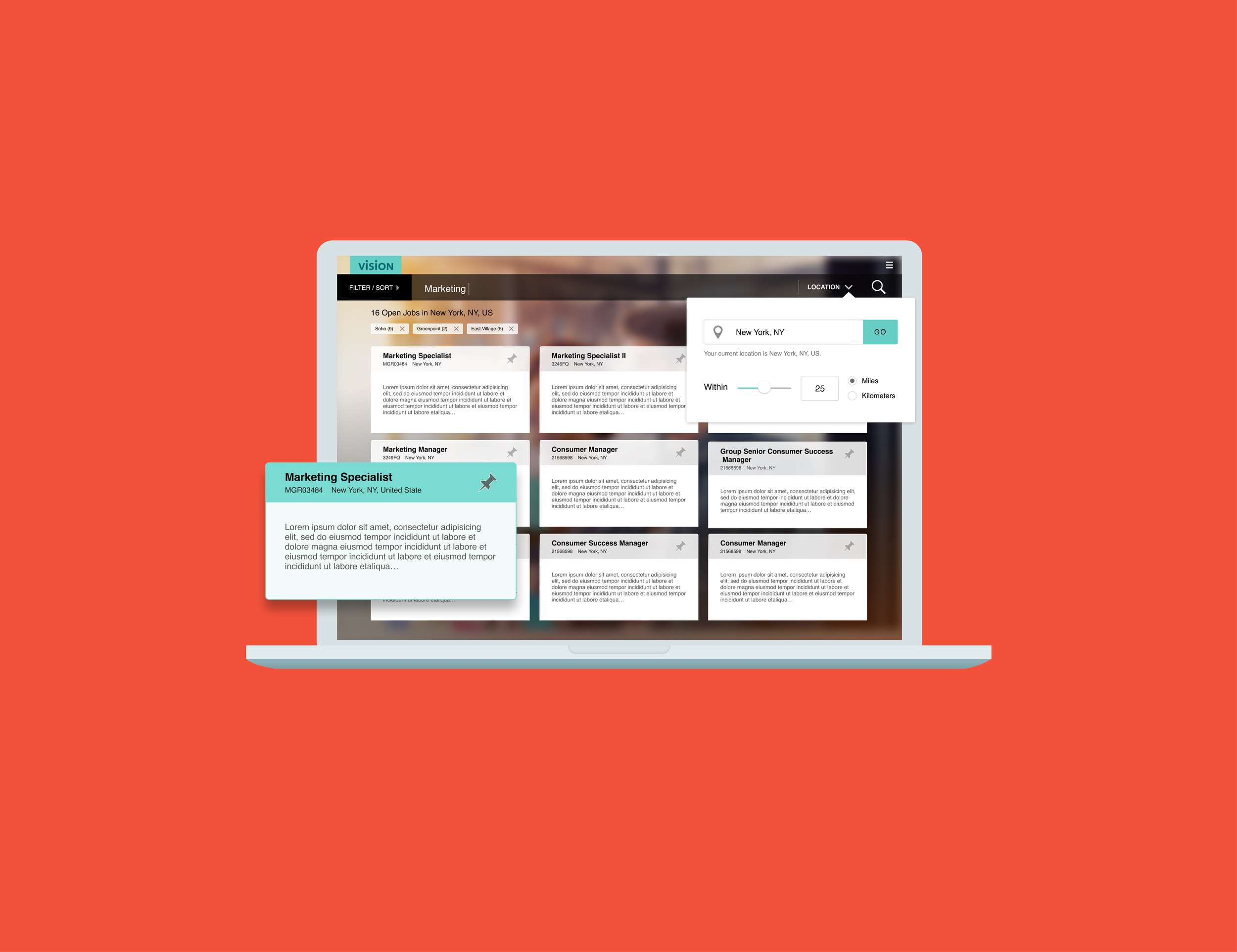
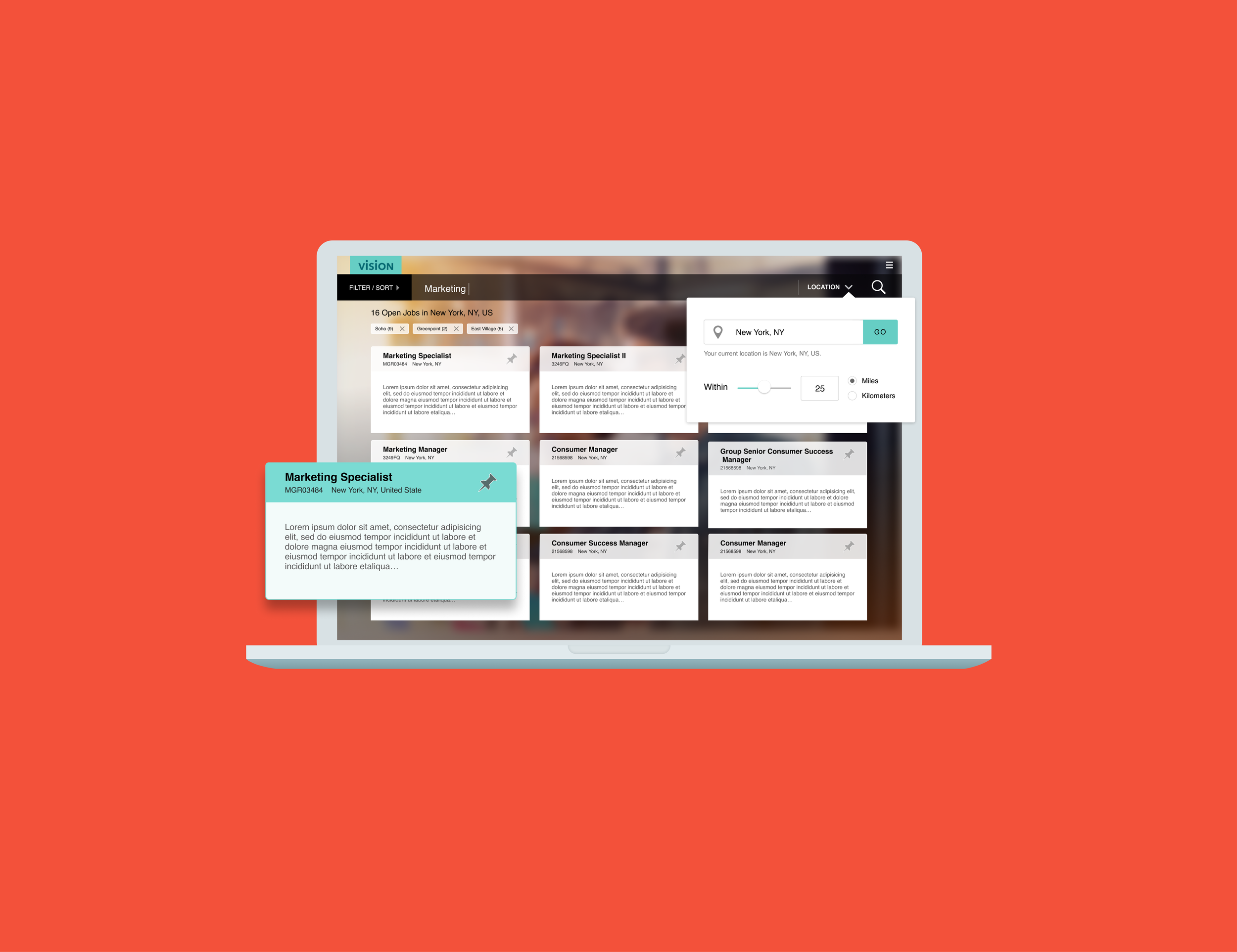
Executive Summary
• Mission: Transform Oracle’s legacy acquisition (Taleo) into a modern, cloud-native recruiting powerhouse to compete with Workday.
• Role: Lead Designer for Candidate Experience. I owned the end-to-end vision, leading a cross-functional squad of designers and researchers while partnering directly with VP-level stakeholders to pivot our strategy from legacy process-tracking to candidate-centered growth.
• Impact: Contributed to 224 net-new HCM customers in the first year and established the foundation for Oracle’s 2025 designation as a Gartner Magic Quadrant Leader.
Strategic Context: From Process-First to Candidate-First
The challenge was not just modernizing screens, but redesigning the underlying experience model for enterprise recruiting at scale.
Market Shift: Enterprises no longer just "track applicants"; they compete on employer brand. Candidates now expect frictionless, mobile-first experiences found in consumer apps.
Legacy Debt: Taleo (the predecessor) was a market leader built for a "system-driven" era. It prioritized recruiter control, which created massive friction and high drop-off rates for candidates.
Strategic Bet: We identified that application drop-off directly impacts recruiting ROI. To win back the market from Workday, we redefined the candidate experience as a first-class system concern—building a model that could handle global compliance and complex requisition rules without breaking the user journey.
Figure — Opportunities for Oracle Recruiting Cloud Candidate Experience
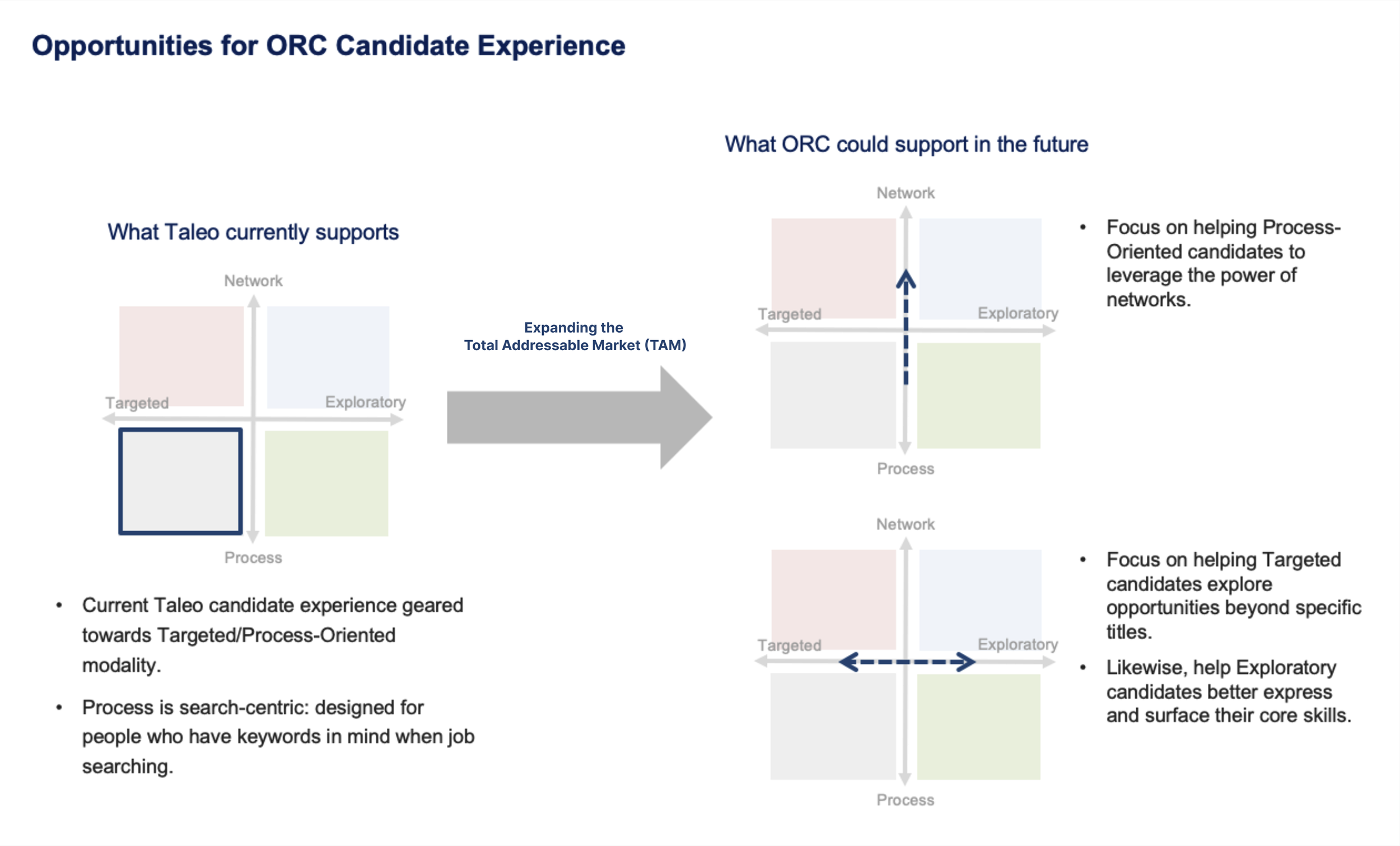
Taleo CE primarily supported targeted, process-oriented candidates, revealing opportunities for ORC to broaden exploration and self-expression across candidate types.
Core Product: A Scalable, Branded Platform
Candidate Experience (CE) was designed as a reusable platform layer within Oracle Recruiting Cloud, balancing global enterprise requirements with a frictionless candidate journey.
Enterprise-Grade Scalability: Built to support high-volume flows for global brands, ensuring system stability across diverse regions, languages, and high-traffic events.
White-Labeling Challenge: I architected the system to be robust enough to support thousands of unique brand identities without requiring custom code for each client deployment, ensuring high configurability at scale.
Design-to-Dev Translation: I led the translation of legacy processes into a cloud-native system, ensuring the "Abstraction Layer" remained a performant reality—not just a design concept—by collaborating closely with Engineering on feasibility.
Global High-Performance Architecture: The platform enables enterprises to maintain unique regional requirements (such as GDPR compliance) while leveraging a standardized, high-performance system architecture.
Explore the live product (desktop demo - link to demo site): Search and Apply flows from a client-customized career site

The demo site shows the desktop experience. The shipped product supports fully responsive desktop and mobile experiences.
Strategic Insights
To move the needle on conversion, we had to align the system’s logic with the candidate’s psychological journey.
From Forms to Discovery: Candidates viewed applying as an ongoing process of discovery and self-expression—not a single, form-driven task.
Identity Gap: Authentication expectations were fundamentally misaligned with candidate mental models, causing immediate drop-off.
Continuity Deficit: Legacy systems prioritized "process control" for the recruiter, but candidates felt "invisible" and uncertain once they hit the "Apply" button.
Core Opportunity:
While the legacy Taleo system primarily served "targeted" candidates (those who already knew the job they wanted), we identified a massive opportunity for ORC to capture the "explorer" candidate—broadening the top of the funnel through better self-expression and discovery tools.
Figure — Candidates’ ideal mental model of the application journey

Research showed that candidates viewed the application as an ongoing process of fit and discovery, requiring a system that prioritized continuity over simple form completion.
High-Stakes Design Decisions
At the Staff level, I prioritized systemic solutions over surface-level UI. These three architectural decisions defined the platform's success.
1. Passwordless Identity: The "No Login" Strategy
Decision: Eliminated mandatory account creation in favor of email-link-based authentication.
Why: Quantitative data identified login screens as the #1 point of abandonment. Candidates view job applications as a low-frequency interaction and resist creating new credentials for every employer.
Trade-off: This required a complete re-engineering of the HCM "Identity" service, balancing frictionless access with rigorous enterprise security and data privacy standards.
How I convinced them: I collaborated with the Identity Security team to implement an 'Authenticated Link' protocol, successfully advocating for UX over traditional passwords by demonstrating that the security risk for job applications differed from financial transactions.
2. Designing for Continuity: Resumable Journeys
Decision: Reframed the application as a continuous, "save-and-resume" journey rather than a single, linear event.
Why: Research revealed "snacking" behavior—candidates discover roles on mobile during transitions but prefer completing detailed applications on desktop.
Result: By treating device-switching and interruptions as primary use cases, we significantly increased completion rates for high-intent candidates.
3. The Abstraction Layer: Decoupling System Complexity
Decision: I architected a "System Buffer" to isolate internal recruiter workflows and complex HR logic from the candidate-facing UI.
Why: To scale globally, we needed to separate what the system does (logic/compliance) from how it is experienced (brand/UI). This layer is what allowed us to implement the Passwordless Identity and Resumable Journey frameworks without breaking the core system.
Mechanism (Theme Editor & Scalable API): This layer was powered by two key structural components:
Theme Editor & Design Tokens: We decoupled brand variables—color, typography, and layout—from core workflows by mapping them to Design Tokens. This allowed for a "translation layer" between client brands and our React library.
Modular Flow Library (Integrated Compliance): I architected a library of pre-configured Flow Blocks covering the entire candidate lifecycle (Search, Apply, Offer). By treating Legal and Compliance requirements as standard Flow Blocks, we allowed clients to intuitively drag and drop mandatory privacy consent as easily as any other part of the journey.
Scalable API Design: I collaborated with Engineering to define a Design-Led API. This served as the data contract that fueled these Flow Blocks, ensuring that regardless of the configuration, the data remained structured and globally compliant.
Staff-Level Impact: This architectural decoupling allowed us to maintain a high-integrity 'System of Record' while empowering clients like Starbucks and JPMC with a tailored 'System of Engagement.' It ensured that we could ship critical updates, such as global GDPR patches, to 100+ global enterprises simultaneously without risking individual site regressions.
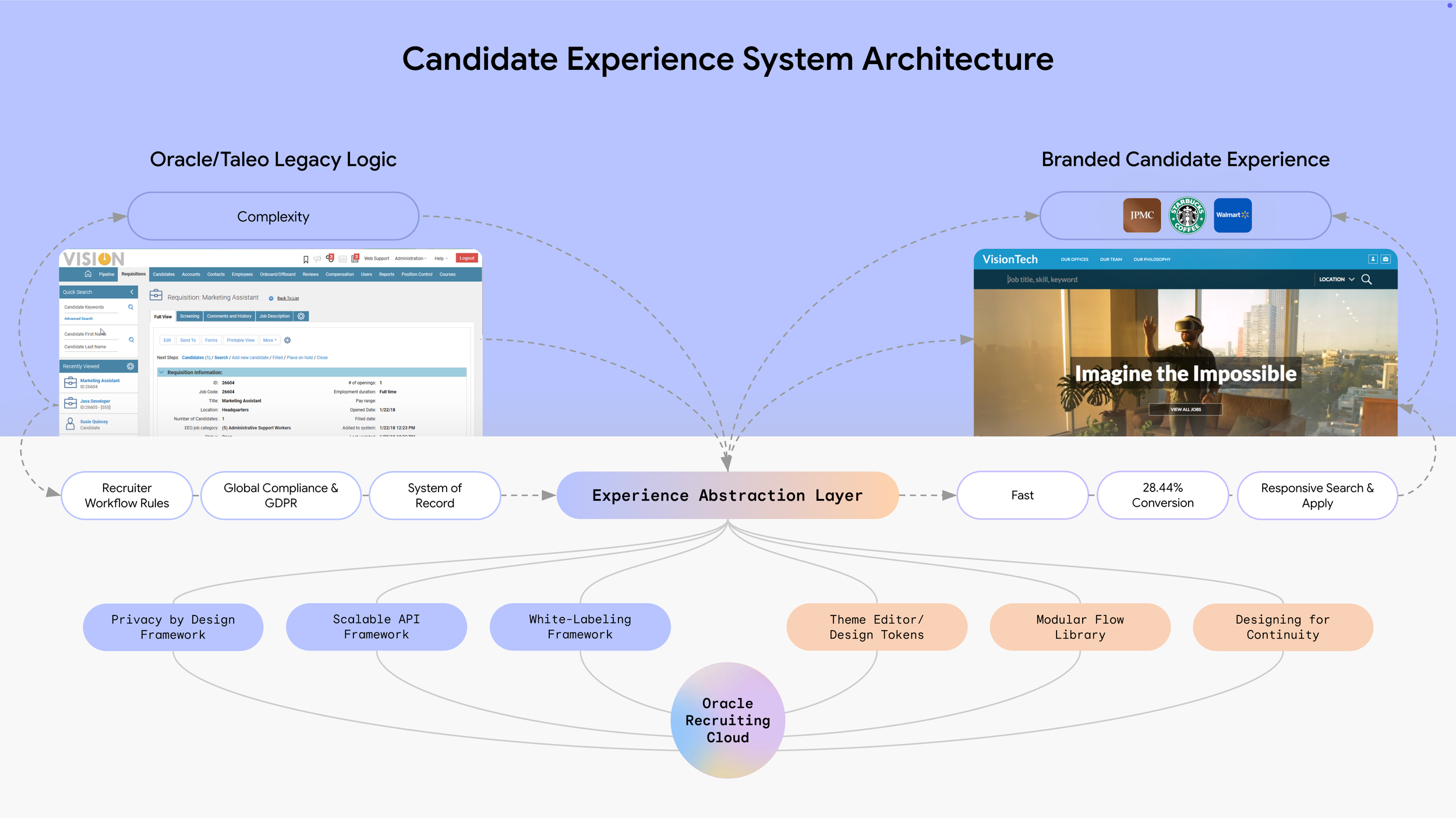
I architected this 'System Buffer' to decouple complex backend compliance from frontend brand expression. This enabled 100+ global enterprises to deliver bespoke candidate journeys without requiring custom engineering or compromising core platform stability.
Impact & Validation
Using Oracle Infinity, we validated the system's performance across 90,000+ real-world interactions over a 7-day window. I used these insights to lead quarterly business reviews (QBRs) with product leadership, using behavioral data to justify further investment in the candidate-first roadmap.
28.44% Conversion Rate: Maintained high conversion even as volume scaled. This was critical for our enterprise clients; by nearly tripling the industry-standard conversion rate, we significantly lowered their 'Cost-per-Lead.' This allowed clients to fill roles faster while reducing the total advertising spend required to attract qualified talent
Figure — Application funnel performance over a 7-day window (Oracle Infinity)
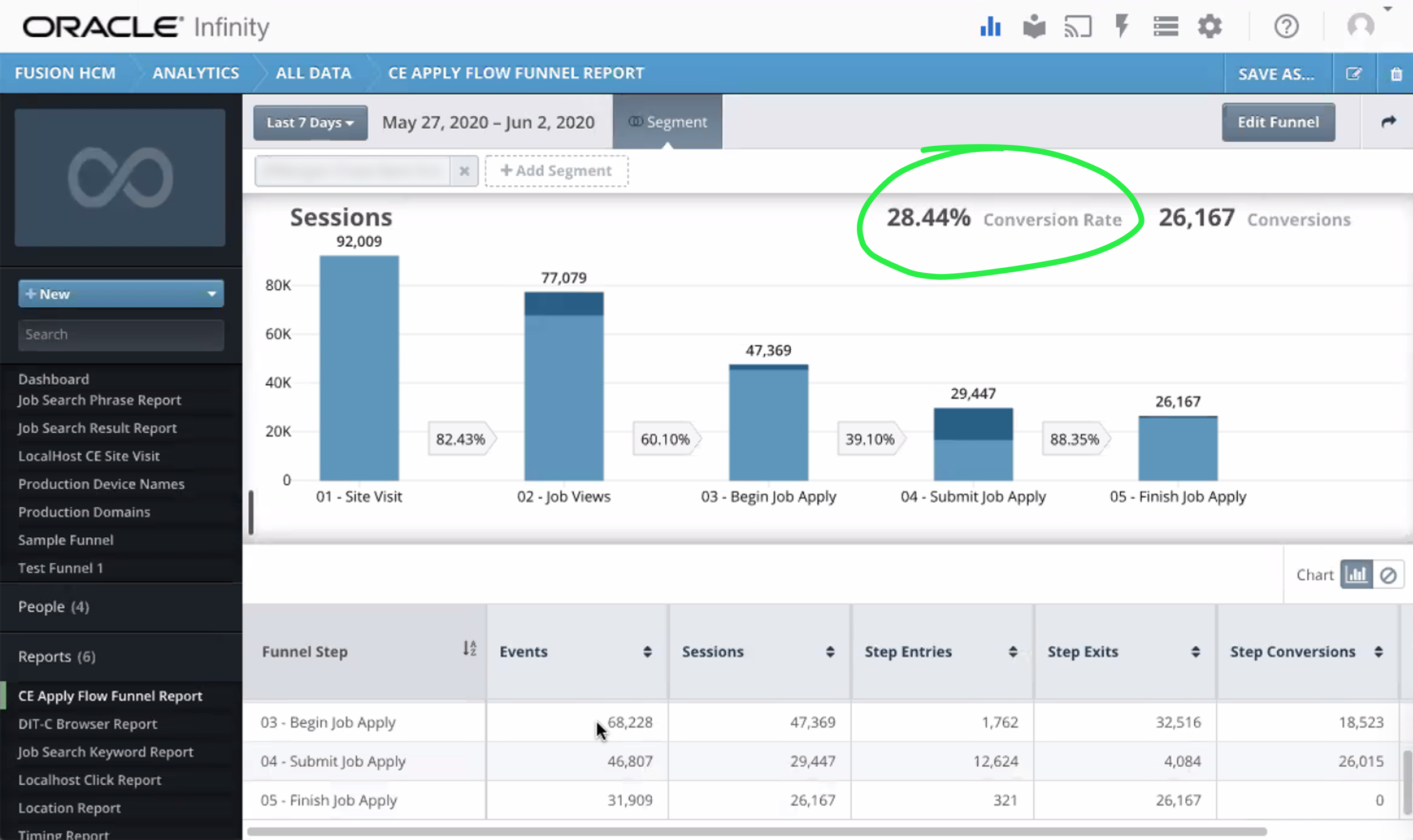
A sustained 28.44% conversion rate across ~90k visits reflects reflects the success of the continuity-first application experience.
Global Reliability at Scale: The platform successfully supported high-traffic volumes in key markets including India, the U.S., and the U.K., proving that our "System Rigor" could handle diverse regional configurations.
Figure — Global adoption of Candidate Experience (Oracle Infinity, June 3, 2020)
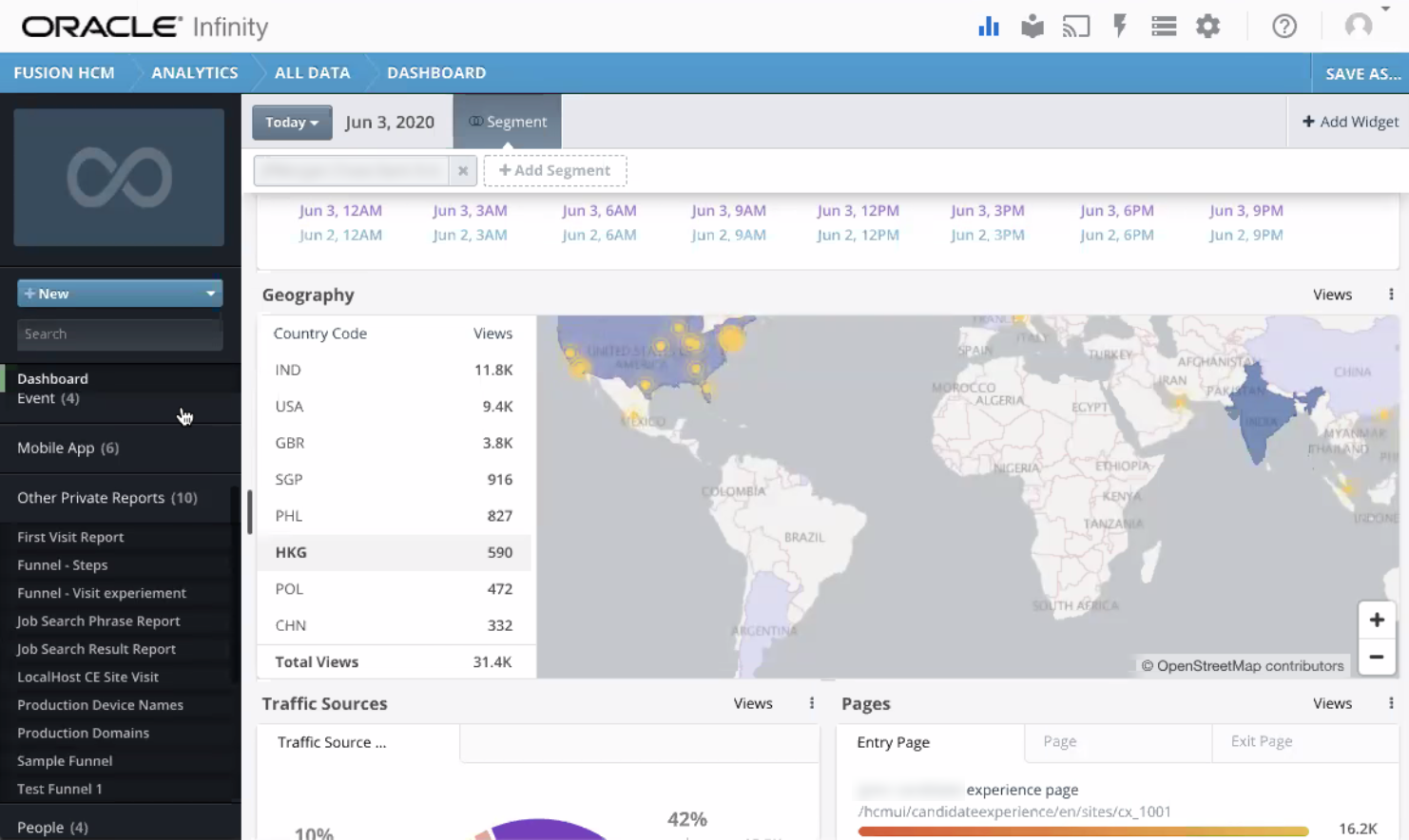
Candidate traffic across regions validates the system’s ability to support global, high-volume recruiting scenarios.
Long-term Strategic Value: The architecture established in this project remains the backbone of Oracle’s recruiting suite. This foundational work supported Oracle’s continued growth, culminating in its recognition as a Gartner Magic Quadrant Leader in 2025.
Why This Project Matters
This project highlights my ability to lead a legacy platform through a critical market transition. It wasn’t just about "User Experience"—it was about Experience Architecture. I successfully aligned stakeholders around a candidate-centered vision while navigating the rigorous constraints of global compliance and enterprise-scale engineering. By redefining the system's foundation, I helped move the product from a legacy utility to a market-leading platform.